Glossary
HVAC Glossary: Heating, Cooling & Home Comfort Terms
Understanding heating, ventilation, air conditioning, and related home comfort terminology can make it easier to maintain your equipment and make informed decisions about repairs and replacements. Browse the definitions below or select a letter to jump to a term.
A
AFUE (Annual Fuel Utilization Efficiency)
A rating that shows how much of a furnace or boiler’s fuel becomes usable heat. A 95% AFUE means 95 cents of every fuel dollar heats your home and 5 cents is lost.
Air Filter
A removable screen in your heating and cooling system that traps dust, pollen, pet hair, and other particles. A clean filter helps air flow properly and keeps your system working efficiently.
Air Handler
The indoor part of an HVAC system that contains the blower fan and other components that move heated or cooled air through your home’s ductwork.
Airflow
The amount of air moving through your HVAC system, usually measured in cubic feet per minute (CFM). Proper airflow is essential for comfort, efficiency, and equipment performance.
Annual Maintenance
A professional inspection and tune-up of your heating or cooling system, typically performed once or twice a year, to help prevent breakdowns and maintain efficiency.
Auxiliary Heat
A backup heating source, often electric resistance heat, that helps a heat pump warm your home when outdoor temperatures are very low or the system needs extra heating power.
B
BTU (British Thermal Unit)
A measurement of heat energy. In HVAC, BTUs describe how much heating or cooling power a system provides. Higher BTU ratings indicate greater capacity.
Blower Motor
The motor that powers the fan responsible for circulating conditioned air through your home’s ductwork and into living spaces.
Boiler
A heating system that warms water and distributes it through pipes to radiators, baseboard heaters, or radiant floor systems.
C
CFM (Cubic Feet per Minute)
A measurement of airflow that indicates how much air moves through your HVAC system each minute.
Carbon Monoxide (CO)
A colorless, odorless gas produced by incomplete combustion. Faulty fuel-burning heating equipment can create dangerous carbon monoxide levels, making proper maintenance and CO detectors important.
Central Air Conditioning
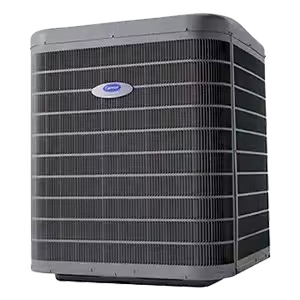
A cooling system that uses an indoor coil and an outdoor unit to cool air and distribute it throughout the home using ductwork.
Compressor
A key component of an air conditioner or heat pump that pressurizes and circulates refrigerant, allowing the system to transfer heat.
Condenser Coil
A coil that releases heat from refrigerant. In cooling mode, it is typically located in the outdoor unit of an air conditioner or heat pump.
Condensate Drain
A pipe or drain line that carries away moisture collected when your air conditioner removes humidity from indoor air.
Contactor
An electrical switch that controls power to major HVAC components, such as the compressor and outdoor fan motor.
Cooling Capacity
The amount of heat an air conditioning system can remove from a space, usually measured in BTUs per hour or tons.
Cooling Load
The amount of heat that must be removed from a building to maintain a comfortable indoor temperature.
Crankcase Heater
A heating element used in some compressors to help prevent refrigerant from collecting in the compressor oil during off cycles.
D
Damper
A device installed inside ductwork that controls or redirects airflow to different areas of a building.
Defrost Cycle
A heat pump operating mode that temporarily removes frost or ice from the outdoor coil during cold-weather heating.
Dehumidifier
A device that removes excess moisture from indoor air to improve comfort and help reduce conditions that support mold growth.
Diffuser
An air outlet designed to distribute conditioned air evenly throughout a room.
Ductless Mini-Split
A heating and cooling system that uses an outdoor unit connected to one or more indoor units without requiring traditional ductwork.
Ductwork
A network of metal or flexible air passages that distributes heated and cooled air throughout a building.
E
EER (Energy Efficiency Ratio)
A measurement of air conditioner efficiency at a specific set of operating conditions. Higher EER ratings indicate better efficiency.
ENERGY STAR
A government-backed program that identifies products meeting specific energy efficiency requirements.
Economizer
A system that uses suitable outdoor air to help cool a building, reducing the need for mechanical air conditioning.
Evaporator Coil
The coil that absorbs heat from indoor air during air conditioning operation, allowing refrigerant to cool the air passing over it.
Expansion Valve
A device that regulates refrigerant flow and reduces refrigerant pressure before it enters the evaporator coil.
F
Fan Coil Unit
An indoor HVAC component that uses a fan and heating or cooling coil to condition air.
Filter MERV Rating
A rating system that describes how effectively an air filter captures particles of different sizes. Higher MERV ratings generally indicate better particle filtration.
Flue
A passage or pipe that safely carries combustion gases from fuel-burning heating equipment to the outdoors.
Furnace
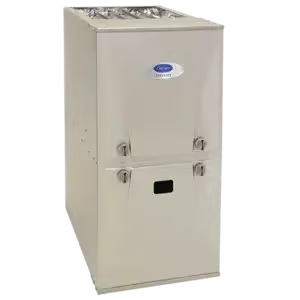
A heating system that warms air and distributes it through ductwork using a blower fan.
G
Gas Valve
A component that controls the flow of natural gas or propane into a furnace or other gas-fired heating appliance.
Geothermal Heat Pump
A heating and cooling system that exchanges heat with the ground or groundwater rather than relying only on outdoor air.
H
HEPA Filter
A high-efficiency particulate air filter designed to capture at least 99.97% of airborne particles measuring 0.3 microns under specified test conditions.
HSPF2 (Heating Seasonal Performance Factor 2)
A rating used to measure the seasonal heating efficiency of heat pumps. Higher HSPF2 ratings indicate better heating efficiency.
Heat Exchanger
A furnace component that transfers heat from combustion gases to indoor air while keeping the gases separated from the air circulating through your home.
Heat Pump
An HVAC system that transfers heat rather than generating it directly. It can provide heating in winter and cooling in summer.
Heating Load
The amount of heat required to maintain a desired indoor temperature during cold weather.
Humidifier
A device that adds moisture to indoor air to help maintain comfortable humidity levels during dry conditions.
Humidity
The amount of water vapor present in the air. Indoor humidity affects comfort, air quality, and how warm or cool a room feels.
HVAC (Heating, Ventilation, and Air Conditioning)
The systems and equipment responsible for controlling indoor temperature, airflow, ventilation, and comfort.
I
IAQ (Indoor Air Quality)
A term describing the condition of air inside a building, including airborne particles, pollutants, humidity, and ventilation.
Ignitor
A component that starts combustion in a gas furnace by igniting the fuel.
Insulation
Material used to reduce heat transfer through walls, ceilings, floors, and ductwork, helping maintain indoor comfort and energy efficiency.
L
Load Calculation
An assessment of a building’s heating and cooling requirements based on factors such as size, insulation, windows, climate, and occupancy.
M
MERV (Minimum Efficiency Reporting Value)
A numerical rating that describes an air filter’s ability to capture airborne particles. Higher numbers generally mean greater filtration efficiency.
Manual J
An industry-standard method used to calculate the heating and cooling loads of residential buildings.
Mini-Split
A heating and cooling system consisting of an outdoor unit and one or more indoor air-handling units, commonly used for ductless comfort control.
Modulating Furnace
A furnace that adjusts its heating output in small increments to match a home’s heating needs more precisely.
N
Natural Ventilation
The movement of outdoor air into and through a building using openings such as windows and vents rather than mechanical fans.
P
Packaged HVAC Unit
A heating and cooling system that houses multiple major components in one outdoor cabinet, often installed on rooftops or beside buildings.
Plenum
An enclosed section of an HVAC system that collects or distributes air between the equipment and ductwork.
Programmable Thermostat
A thermostat that automatically adjusts indoor temperature settings according to a schedule.
R
R-Value
A measurement of how well insulation resists heat flow. Higher R-values indicate greater resistance to heat transfer.
Refrigerant
A specialized fluid that absorbs and releases heat as it circulates through an air conditioner or heat pump.
Refrigerant Charge
The amount of refrigerant contained in an air conditioning or heat pump system. The correct charge is important for efficiency and performance.
Return Air
Indoor air that travels back to the HVAC system through return ducts or grilles to be filtered and conditioned again.
Reversing Valve
A heat pump component that changes the direction of refrigerant flow, allowing the system to switch between heating and cooling modes.
S
SEER2 (Seasonal Energy Efficiency Ratio 2)
A rating that measures the seasonal cooling efficiency of air conditioners and heat pumps using updated testing procedures. Higher SEER2 ratings indicate greater efficiency.
Short Cycling
A condition in which an HVAC system turns on and off too frequently, potentially reducing efficiency, comfort, and equipment lifespan.
Single-Stage System
Heating or cooling equipment that operates at one fixed output level whenever it runs.
Smart Thermostat
A thermostat that can connect to a network and offer features such as remote temperature control, scheduling, and energy-use insights.
Static Pressure
The resistance to airflow inside an HVAC duct system. Excessive static pressure can reduce airflow and strain equipment.
Supply Air
Heated or cooled air delivered from an HVAC system into rooms through supply ducts and registers.
T
Thermostat
A device that monitors indoor temperature and controls heating or cooling equipment to maintain the desired setting.
Thermostatic Expansion Valve (TXV)
A refrigerant metering device that adjusts refrigerant flow into the evaporator based on operating conditions.
Ton of Cooling
A unit of cooling capacity equal to 12,000 BTUs per hour. A three-ton air conditioner provides a nominal cooling capacity of 36,000 BTUs per hour.
Two-Stage System
HVAC equipment that operates at two output levels, typically a lower setting for mild conditions and a higher setting when additional heating or cooling is needed.
V
Variable-Speed Blower
A blower motor that adjusts its operating speed to deliver more precise airflow and improve comfort and efficiency.
Ventilation
The process of bringing outdoor air into a building and removing stale indoor air to help maintain indoor air quality.
Ventilator
A device or system that exchanges indoor and outdoor air to support proper ventilation.
Venting
The process of safely directing combustion gases or unwanted indoor air to the outdoors.
Voltage
The electrical potential that powers HVAC equipment and components. Different HVAC systems and controls require specific voltage levels.